Water conservation is important to everyone. Conserving water benefits our natural ecosystems, reduces energy use and can even save you money. Making simple changes around your home can significantly lower your water usage.
Water saving tips
- Turn the water off while you’re brushing your teeth. Instead, fill a glass and use that water to wet your brush and rinse your mouth. Doing this could save 9,100 litres of water per year, per person.
- Don’t use the toilet as a trash can, throw tissues and other trash in the wastebasket, not the toilet.
- Install low-flush toilets in your home. These toilets use less than six litres of water and can save as much as 19 litres of water per flush compared to older models.
- Check for toilet leaks, by putting a little food colouring in the tank. If the colour begins appearing in the bowl after a few minutes even without flushing, your toilet has a leak.
- Fix dripping faucets, a slow drip can waste 56 to 75 litres a day.
- Never pour grease or oil down a drain. Besides clogging the drain, you’ll use a great deal of water trying to wash the grease out of the pipes.
- Verify that your home is leak free by reading your water meter before and after a two-hour period when no water is being used. If the meter does not read exactly the same, there is a leak.
- Insulate your water pipes, you’ll get hot water faster and avoid wasting water while it heats up.
- Use a rain barrel and save money by reducing your monthly water bill.
You can also visit EPCOR's Conservation page for more great ideas
Voluntary odd-even watering program
Morinville encourages residents and businesses to adopt an odd/even watering schedule. This supports conservation and assists with the spring/summer high water demand.
On even days of the month, residents of even-numbered addresses can water outside.
On odd days of the month, residents of odd-numbered addresses can water outside.
Tips for more efficient watering:
- Water in the early morning between 6 a.m. and 10 a.m.
- Do not water when it is windy.
- Soaking your lawn once per week produces a healthier lawn than watering several times a week.
- Water only when needed, to a maximum of 1 hour a week, or 2.5 centimeters (1 inch) less if it rains. You can measure this by placing a container on your lawn while watering. When the water level reaches 2.5 centimeters (1 inch) you can shut off the sprinklers. This helps produce a deeper root system, which is less likely to be damaged by drought.
- Place your sprinkler so water lands on the lawn or garden, not on paved areas.
- When watering trees and large shrubs, water around the drip-line of the tree (area below the branches where water drips naturally from leaves) not directly at the trunk.
Xeriscaping
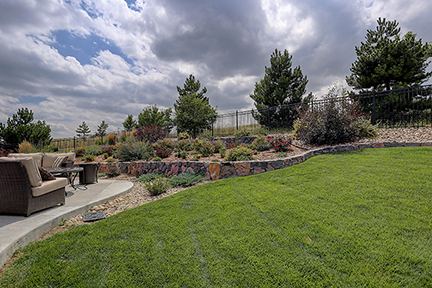
Xeriscape landscaping is a method that creates an attractive, sustainable landscape that conserves water. The objective of xeriscaping is to create a garden or yard that requires little to no watering. This can be achieved by:
- choosing drought resistant plants and grouping them together based on watering requirements
- limiting turf or lawn areas by incorporating areas such as patios or rock gardens
- ensuring any irrigation systems used are operated efficiently
- improving soil so that it is able to absorb water and hold nutrients
- utilizing mulch to help keep moisture in and weeds out